Are you wasting valuable executive energy trying to fix your leadership weaknesses?
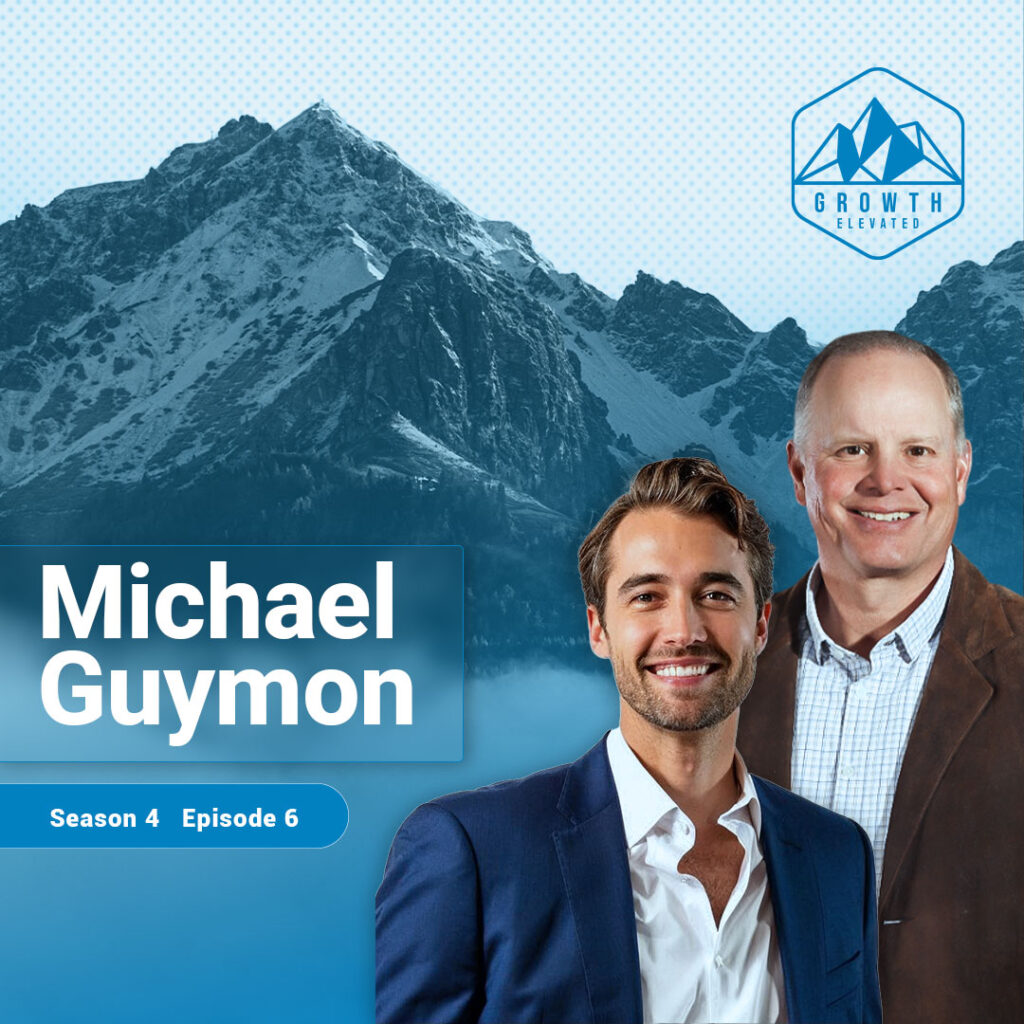
In this episode of the Growth Elevated Leadership Podcast, host Julian Castelli sits down with Michael Guymon, president and CEO of SQA Services, to unpack a critical mindset shift that separates good leaders from great ones. As organizations scale, the expectations placed on leaders evolve. The ability to do everything yourself stops being an advantage and quickly becomes a bottleneck.
Drawing on experience from SpaceX, Rocket Lab, and high-performance engineering environments, Guymon explains why trying to turn every weakness into a strength is not only inefficient but often counterproductive. Instead, high-performing leaders focus on building teams that complement their gaps. The real leverage comes from surrounding yourself with people who think differently, act differently, and challenge your assumptions.
This conversation offers a grounded look at what leadership actually requires as companies grow. It moves beyond traditional advice and focuses on building systems, teams, and cultures that scale.
For founders, CEOs, and operators navigating growth beyond the $20 million mark, the message is clear. You do not need to become a perfect leader. You need to build the right team.
Key Takeaways:
- Fixing weaknesses is an inefficient leadership strategy at scale
- Hiring for strengths creates leverage and accelerates execution
- The right executive team balances personality, skill, and decision-making style
- Leadership is about building systems, not perfecting yourself
- Sustainable growth requires clarity, delegation, and trust
👉 Visit us at GrowthElevated.com
📲 Follow us on LinkedIn for daily leadership inspiration and updates
Transcript
Julian Castelli (00:01.691)
Hello, this is Julian Castelli. I’m the host of the Growth Elevated Leadership Podcast, where each week we talk with inspirational entrepreneurs and leaders in the tech industry. Past guests have included CEOs and CXOs of great companies like Workfront, CHG Healthcare, Pathology Watch, InMoment, Canopy, the San Francisco 49ers, and many more. This episode is brought to you by Growth Elevated. We are a community of tech founders, CEOs, and CXOs who are committed to working together
to share our best practices and learnings in an effort to help all of us become better leaders. We do this through educational programs like this podcast, as well as our blog, and of course, our annual Ski and Tech Summit, where we bring tech leaders to beautiful parks in Utah to enjoy the camaraderie and collaboration in the beautiful mountains of Utah. So if you’re a skier and you enjoy the outdoors and like networking with other tech leaders, check us out at growthelevated.com and please subscribe to this podcast wherever you listen to podcasts.
Today, I’m super excited to welcome Michael Geiman to the podcast. Michael is the president and CEO of SQA Services. They are a global leader in supplier quality and risk management solutions. Since joining in 2022, Michael has driven a data and technology forward approach to proactive supply chain assurance. Geiman previously held leadership roles in supply chain and quality engineering at SpaceX, Rocket Lab USA, and Heliogen.
Michael Guymon (01:18.222)
.
Julian Castelli (01:28.119)
supporting some of the industry’s most demanding production environments. Michael, welcome to the program today.
Michael Guymon (01:34.064)
Thanks, Julian.
Julian Castelli (01:35.811)
Thanks for being with us.
Michael Guymon (01:37.634)
Good to be here, really appreciate it.
Julian Castelli (01:40.228)
So you’re coming into your fourth year now as a CEO and leader. Give us a little bit of your background and how you got this SQA.
Michael Guymon (01:51.895)
For sure. Yeah, it’s definitely a bit of a convoluted route. I didn’t expect to end up here, especially not in this role, but I was a mechanical engineering student. always, you know, was into really cars and wanted to go the automotive route. And then at our career fair at Texas A there was a company called SpaceX there. And I was like, you know what? Rockets are interesting. They go fast and make noise too. So started a conversation there, ended up taking that as my first job out of school, moved out to California.
Julian Castelli (02:13.602)
and then can do the third.
Julian Castelli (02:20.877)
What a rocket ship move. Couldn’t resist.
Michael Guymon (02:23.053)
for sure. Yeah. So at the time I was interviewing with, yeah, I was interviewing with BNSF railway. I had an offer from them and then I was interviewing with John Deere and then SpaceX. So I was like, all right, trains, tractors and rockets. feel like, you know, four-year-old Michael would be really proud of my options. Yeah. so I went, went the rocket route and, definitely turned out to be the right move. you know, wild place to start your career. this was in 2013.
Julian Castelli (02:38.701)
Wow, which one of these is not like the others?
Michael Guymon (02:52.396)
We were launching two, three rockets a year, and Elon wanted to get to a rate of building 40 a year, and then eventually launching every day. So rather monumental task. And so started in supplier quality there. We kind of reorged several times, grew into supplier development organization, took on some additional responsibilities, then moved into the tooling group for a while, and then met a
Julian Castelli (03:01.751)
Mm-hmm.
Julian Castelli (03:07.503)
Thank
Michael Guymon (03:21.793)
Director there who went on to a company called rocket lab And then once he got there, he said hey Michael, you should come check out rocket lab, too. So Moved over there ran supply chain and quality for the US And it was kind of like going back in a time machine from SpaceX back into the early days because they were again Launching, you know a couple times a year trying to ramp up Yeah, exactly and so It was cool though because I got to go back with
Julian Castelli (03:43.209)
So they were further ahead and Rocket Lab was catching up. Interesting.
Michael Guymon (03:51.539)
at least some experience and knowledge and like, Hey, we tried this and it didn’t work or this is how we did this.
Julian Castelli (03:54.006)
Yeah, well, you’re literally coming from the future. What an asset you must have been coming to that business saying, OK, you know exactly where we’re going.
Michael Guymon (04:01.77)
Yeah. So, that was a fun experience and then ended up leaving there and going to a Heliogen solar energy startup was like supply chain employee number one. And that was an even bigger kind of task of getting from this little prototype idea into this mass manufacturing environment. And about a year into that, the founder and CEO of SQA services reached out to me and
Julian Castelli (04:16.033)
Thank
Julian Castelli (04:20.886)
And. Got it.
Michael Guymon (04:28.908)
It was like, hey, Michael, it’s been a while. We should catch up. So when I was at SpaceX, we were running a lot of supplier quality initiatives, source inspection, onboarding and approval of our suppliers. And we started using SQA to do all of that. And so I got to know the founder and CEO from that as a client, basically. And so we stayed loosely in touch over the years. And he called me or texted me and said, hey, let’s catch up. Let’s get breakfast this week. Two days later, went over.
Julian Castelli (04:52.45)
I’m told by intersex debates that, let’s pass around the K practice this week. Yeah, that’s really good. I’ve been picked it off with. I love the company I built it with my dad. That first 27 years. It’s nice that we can build relationships. first 27 years have very important. I built it with my dad, and there’s been a special on the path.
Michael Guymon (04:58.71)
you know, had a really good conversation with him and he kicked it off with, you know, I love this company. I built it with my dad. I’ve run it for 27 years. you know, the clients that we’ve, we’ve built the relationships, the services that we do are super important. you know, I built it with my dad and there’s like a special element of that, of like running this, you know, kind of family business. but after 27 years of being a CEO and after COVID and the great resignation and
Julian Castelli (05:20.814)
But after 27 years of being in the video and after a great presentation, I just got to find out what the next survey is. the only way I could do that is I could give yourself a business. So I was asking people for a few years. I didn’t also have that experience that I have that I give myself. But I took it to the next level.
Michael Guymon (05:26.634)
My kids are graduating now. I just, I gotta find out what’s next for me. And the only way that I can do that is I can either sell the business and I’d sit on a pile of cash, but I’d be bored in two years, or I can stay involved. But in order to do that, I have to have somebody that can come on that I trust that’s gonna lead it, take us to the next level, someone who’s gonna think differently than me. And the reason that you’re here today is to talk about the CEO role. And I was like shocked.
Julian Castelli (05:50.893)
Wow. Yeah.
Michael Guymon (05:55.849)
So not your typical Thursday morning breakfast. And that turned into a two month conversation, you know, on some, variety of topics and ultimately decided to join the team. And yeah, that was over three and a half years ago now. And it’s been an awesome experience.
Julian Castelli (06:04.5)
Okay.
Julian Castelli (06:12.13)
Well, that sounds like a wonderful journey. Congratulations. So tell us what SQA does so we can understand the basics of what you’re leading.
Michael Guymon (06:15.434)
Thank you.
Michael Guymon (06:22.527)
For sure, yeah, it’s a bit challenging because we do so many things. So we’ve been working as a leadership team to really hone that message better. And ultimately what it boils down to is we want people to be able to trust their supply chains. And it’s such a simple concept, but it’s so hard to execute. Because you look at a lot of these big companies, we primarily work in aerospace and pharmaceutical industries. Amongst some others, we work with some.
Julian Castelli (06:24.813)
Thanks for watching!
Julian Castelli (06:47.697)
Places where supply chains are absolutely critical, right? High risk.
Michael Guymon (06:50.778)
Exactly. We work with nuclear energy startups, companies like Google for their data center build outs. But in all of these cases, it’s complex supply chains, typically highly regulated environments. And the consequences of failure are really bad. And in many cases,
Julian Castelli (07:02.64)
It’s going to be highly recommended.
Julian Castelli (07:08.678)
Yeah, you mentioned high-consequence industries, right?
Michael Guymon (07:11.464)
Yeah. So in many of these cases, it’s like, hey, if my product fails, people die. And so the oversight there and the effort that’s put into making sure the supply chain is trustworthy is monumental. And many of these are global supply chains. So SQA has built a network of quality professionals in 65 countries that can go do work on behalf of these businesses.
Julian Castelli (07:18.613)
Okay.
Julian Castelli (07:26.346)
Right.
Julian Castelli (07:32.683)
Thank
Michael Guymon (07:38.248)
You know, if a company like Johnson and Johnson needs to go audit 800 suppliers all over the world, they can either fly their own people, you know, from their headquarters or hubs all over to do that. Or they can use a company like us to say, okay, well, you’ve got, you know, an audit in Malaysia. Okay. Well, I have these auditors in Malaysia and I can find one that matches the skillsets and needs for you. And we can go audit that facility on your behalf or, know, aerospace companies, a lot of it’s on the inspection side. like.
a company like SpaceX or Boeing will be buying these very complex parts from their suppliers. And before they ship, they want to make sure that the part actually conforms to engineering specifications. So we can send highly trained, qualified inspectors to the supplier site to do visual, dimensional, maybe even some functional checkouts before those parts ship in order to make sure that once they arrive at the OEM, they can just go straight on to the…
the shop floor straight into inventory, they don’t have to do a bunch of redundant checks themselves.
Julian Castelli (08:40.758)
That’s awesome. Yeah, so high consequence critical supply chains for complex and regulatory businesses, right? So you guys are specialists.
Michael Guymon (08:51.229)
Yes, very much so. It’s a niche, but we like to think we do it pretty well and we’re continuing to hone that.
Julian Castelli (08:59.584)
Yeah. So you started four years ago. Roughly how large was the company when you started and where are you today? Whatever you’re comfortable sharing.
Michael Guymon (09:07.262)
Yep. Yeah. we’re, you know, family owned business. We don’t typically share a lot of, of revenue numbers, but let’s just say we were in like the, the, we’ll call it 20 to 30 million, range when I started and the, the goal for this year is to, double that. So, yeah, so it’s been, it’s been pretty good. we’ve seen a lot of growth, a lot of challenges along the way. certain, you know, industries and areas growing much faster than others and.
Julian Castelli (09:24.267)
That’s awesome.
Julian Castelli (09:27.985)
Thank you.
Michael Guymon (09:34.707)
So we’re trying to look at an executive team to say like, all right, well, where do we invest? Where do we try to replicate some of the magic that’s happening in this industry and other industries? And where do we just acknowledge, okay, this industry is at kind of a plateau right now. Let’s wait it out and put our efforts somewhere else. And those are all strategic skill sets and thought patterns that I never had to do before being in this role. It’s like, just execute on building this product. And so that’s been a fun.
Julian Castelli (09:35.614)
the tribal government executive team to the tribal circuit.
Yeah.
Julian Castelli (09:51.224)
Yeah, totally.
Michael Guymon (10:03.229)
learning experience and challenge for me.
Julian Castelli (10:06.025)
Yeah. So, so how do you think things have changed or how have you proactively tried to change? This is a long time family owned business, family run business. You’re the first external CEO to come in. What are some of the changes that you brought and how long did it take you to kind of come up with the, the, the initiative and the courage to say, okay, well, just cause it’s always been done the same way, we’re going to start doing some things a little different. Can you think of a couple of things that where you’ve, where you kind of felt confident enough to make those changes?
Michael Guymon (10:32.285)
Yeah, for sure. I think, you know, honing in on confidence is a good, good area to start. think is so, you know, I was a senior manager before joining here, you know, so not even close to the C-suite. And I think there was an initial period where I had to build some self-confidence and recognize like, all right, well, I’m here for a reason. Like I may not have experience doing this and I may not know all the right answers, but like, you know, something has gotten me here. Something has prepared me for this. And I had to kind of, you know,
Julian Castelli (10:48.544)
Mm-hmm.
Julian Castelli (10:57.992)
Right.
Michael Guymon (11:03.368)
willingly step into those shoes and do that consciously because it wasn’t like my natural tendency. And so I think that was, you know, like imposter syndrome kind of deal starting out and I still have that at times where it’s just like, yeah.
Julian Castelli (11:03.89)
Thank you.
Julian Castelli (11:08.426)
Everybody does everyone I talked to the imposter syndrome is one of the common common things because all of sudden you’re in the chair where everyone thinks you’re supposed to know everything and You realize I’m still the same guy was yesterday. I know some things but not everything
Michael Guymon (11:22.75)
Yeah.
Yeah. that’s where I do networking with other CEOs and leaders and organizations like YPO and this, your growth elevated. I think your summit is awesome. But you quickly come to that realization. You’re like, from the other side of the fence, I thought you guys had all the answers. And now I’m here and I realize we’re all just confused and building the plane as we fly it. And there’s some comfort in that.
Julian Castelli (11:41.715)
That’s the secret, right? You’re not alone.
Julian Castelli (11:49.396)
You
That’s why it’s so valuable to have a peer network, right?
Michael Guymon (11:54.77)
For sure. So, you know, that was like big on the personal note. think from the company standpoint, one of the things that was most interesting to me to take this position was the fact that, okay, this is a very successful stable business that’s been built over, you know, a few decades, great relationships with some of the biggest brand names in the world. And we’ve got this network of, you know, really great people all over the world, but we haven’t really done anything to capitalize on top of that with.
data analytics, digital products, and some of these things we’d even started to build prior to me joining for our own internal usage to help us be more efficient in things. so seeing that opportunity to say, hey, I think we’re sitting on a really big opportunity here to really kind of pivot and take this thing to the next level and look at how do I add value to these clients by giving them different types of information and insights and tools.
Julian Castelli (12:26.311)
Yeah.
Julian Castelli (12:49.033)
you’re connected.
of information.
Michael Guymon (12:53.959)
not just people and kind of external labor to augment their team. And so that’s something that we’ve been working towards, hired our first head of digital products last year, and she’s working to really build out that roadmap and strategy. And we’re really just improving the team in that area to drive us forward. From kind of a cultural level, when I first stepped in, one of the biggest things that
Julian Castelli (12:55.974)
Cool.
Julian Castelli (13:00.294)
I realized.
Michael Guymon (13:22.663)
I realized was one of the company values was listed as harmony and like at surface level, and I get why it was like it’s something that is nice. You want to go to a place where you feel like everybody is working together and getting along. And so I understand the intent, but I also think in many cases where there’s harmony, it’s artificial. And if you have enough people working together,
Julian Castelli (13:31.508)
Yes. Maybe you’re not pushing each other enough, right?
Michael Guymon (13:51.641)
and everybody agrees on something, that usually means that people don’t care enough to even think about it or that they don’t feel safe enough to voice their opinion or there’s a lot of other, I think, underlying causes to that artificial harmony and you’ll see passive aggressiveness and people going around people and there’s just a lot of symptoms from it that I started to realize the more that I…
Julian Castelli (14:00.169)
Thank you, Alan.
Michael Guymon (14:20.059)
you know, got integrated with the team and kind of saw what was occurring and areas where we were being held back. And so we’ve kind of shifted to this conflict culture, which is, yeah, it is.
Julian Castelli (14:30.309)
That sounds like a big contrast. You’re coming in, it’s a harmony culture, and you’re saying I want conflict? Really? Tell us, tell me more.
Michael Guymon (14:36.356)
Yeah. full, full disclaimer, we’re still figuring it out. All right. The pendulum is probably swung too far in one direction and we have to pull it back. But, I think it was important to, to really emphasize the, that diverse opinion and thought and the ability to like, have all of the ideas out on the table so that we could hone the best one. And I remember, you know, it was like my first few weeks here, there’s the stark.
Julian Castelli (14:41.032)
You
Julian Castelli (14:46.492)
I it was important to say.
Thank
Thank you.
Michael Guymon (15:03.152)
contrast from the organizations I’ve been in that have been like fast-paced startups, know, SpaceX type cultures where people are constantly challenging you and like poking holes in your ideas.
Julian Castelli (15:07.951)
Yeah. Yeah, I’ve heard the SpaceX has the conflict culture, you know, fine tuned. Or at 11.
Michael Guymon (15:17.67)
Yeah, for sure. And yeah, yeah, maybe even a 15. But then coming here, you know, I would throw out an idea in a meeting and people would just be like, okay, yeah, that’s what we’ll do. And I’m like, Whoa, whoa, whoa, time out. Like, that was just an idea. You know, I don’t want us to go down a path that’s bad. I’m just here like,
Julian Castelli (15:34.771)
So you were expecting debate, right? So you threw an idea out and expect the chew on it and debate for a while and kind of have the competition of ideas rise. And you saw no debate. They just said, sure.
Michael Guymon (15:39.769)
Yeah.
Michael Guymon (15:43.694)
Mm-hmm.
Michael Guymon (15:47.652)
Yeah. And in some cases, right. And I also tried to be pretty refrained from like trying to throw out way too many ideas or stir the pot too much in my first few months. Right. I really wanted to observe. Yeah. Yeah. And that’s also something I’ve come to find is like a strength, but also a weakness or a blind spot of mine. It’s like, I can be a bit too analytical. Like the engineer in me wants to think through every
Julian Castelli (15:56.422)
Right, you gotta learn, you gotta make sure you know what your landscape is at the new role.
Julian Castelli (16:09.991)
you
Michael Guymon (16:13.539)
little detail and sometimes as a leader, especially at the CEO role, like decisiveness is key to success and like making a bad decision is sometimes better than making no decision. And so that’s something I’m still learning. But yeah, so we really worked on creating a culture where people felt comfortable challenging each other. And part of that was just through hiring some people and that came from different cultures. And so I hired a
Julian Castelli (16:22.055)
There you go.
Julian Castelli (16:26.02)
Sure.
Julian Castelli (16:40.55)
Yeah, so you got to show people what it looks like to get comfortable,
Michael Guymon (16:44.004)
Yeah. Yeah. So I hired a former boss of mine named Paul Parkin, who I worked with at SpaceX. I worked for him at SpaceX and Rocket Lab, and we worked together at Heliogen. And he is very different than me. He’s very, very blunt in the way that he communicates and he doesn’t sugar coat things. But he’s doing it out of like a passion to succeed. But at times like it can be really shocking to people that aren’t used to that.
And so, you know, one of the things I’ve learned as a leader is like, can try to make all your weaknesses into strengths, but that’s going to be an uphill battle. The good thing as leaders is like, you can just hire people that have strengths that you don’t have and allow that, you know, to kind of just happen organically and naturally. And so it’s something that, you know, I still want to work on.
Julian Castelli (17:10.726)
Yeah.
Julian Castelli (17:21.689)
Mm-hmm Yeah
What was the strength you were hiring him for?
Michael Guymon (17:34.98)
Um, really that like, uh, willingness to shake things up, you know, it’s like he, he, he’s one of those, it’s just like, wants, he wants action. He wants movement. He wants progress. He’s like his, you know, one of his taglines is like, let’s just get in the races. You know, it’s like, we don’t have to solve everything today. Let’s just start working on it. And it’s, know, the opposite of how I would, you know, typically approach problems, which was like, let’s plan out the whole thing and figure out every little corner case.
Julian Castelli (17:40.92)
Okay. It was a blunt instrument.
Julian Castelli (17:51.96)
Yeah, get started.
Start running.
Julian Castelli (17:59.494)
So he’s your urgency catalyst maybe a little bit. That’s great.
Michael Guymon (18:04.261)
And so, you know, bringing on people that balance the team out in those areas. For sure. Yeah. Um, and it’s not just him, you know, I hired a head of finance who’s a little more that way. And, um, I brought in a chief of staff just recently after listening to your chief of staff podcast, I might add. Yeah. Uh, yeah, it’s great. Also a guy I worked with at, you know, SpaceX rocket lab and Heliogen and same thing. We, did our disc profiles. were like polar opposites and.
Julian Castelli (18:16.41)
Mm-hmm.
Julian Castelli (18:21.346)
Well, I’m glad to hear that. Is it going well? Is it helping you guys?
Julian Castelli (18:32.622)
Yeah. Okay.
Michael Guymon (18:34.095)
virtually every category, but we’re fundamentally aligned like philosophically and we want the same thing. We just go about it very different ways. And so I think that’s really important is to make sure that you’re hiring people that balance you out and it can create more day-to-day challenges as you’re having to manage some intense personalities and just people that are not really aligned in how they communicate.
Julian Castelli (18:53.35)
Okay.
Michael Guymon (19:02.808)
I think if you can dial that in, it’s really, powerful.
Julian Castelli (19:07.106)
So how do you think about the right people, right seats? I know that’s one of the frameworks you’ve been thinking about. And so you have a cultural aspect that you’re talking about, but you also need an expertise element, know, capabilities. How do you think about the right seats and the right person for the right seat?
Michael Guymon (19:25.335)
Yep. Definitely one of my biggest lessons, if not my biggest lesson that I’ve learned since being in this role is just how crucial that is. And I think especially going into more of an executive role where you’ve got like a larger canvas to paint on, know, previously in my career, it’s like I receiving inspectors or inventory clerks or, you know, quality engineers or like these kinds of niche roles. And the job description was pretty clear. The performance criteria was pretty clear.
Julian Castelli (19:44.997)
to take a vector or an
Julian Castelli (19:52.869)
Mm-hmm.
Michael Guymon (19:55.222)
And so it was very easy to see like, okay, this person isn’t performing in this role. Like I need to take some action. I think as you get into the executive space, it becomes a lot murkier and it’s harder to really put some of those quantifiable things behind it. Cause you don’t have like this checklist and this like deliverable every single day. You’re kind of looking at these macro trends of like, well, how is this person moving us forward and
the realm of sales or in the realm of financial analysis or all of these things.
Julian Castelli (20:25.144)
Sure. Right. what does look, you have to know what good looks like in all those different functional areas and it’s hard, right?
Michael Guymon (20:33.857)
Yeah, which is this challenge. I’m an engineer. Like I don’t really know what great looks like and a finance or a sales leader, you know, but if, it’s more operations focused and engineering focused, I have a better idea. And so I think it, took me, you know, quite a while to really get a feel for that. And I’m still something that I’m learning, but I think, you know, right person, right seat, like both sides of that are very important, but I think right person is the one that you have to get right first.
Julian Castelli (20:36.709)
Yeah.
Julian Castelli (20:40.387)
Yeah.
Julian Castelli (20:50.012)
Yeah.
Julian Castelli (21:02.508)
And do you have a set of values that either you inherited or you created? How do you determine what the right person is? mean, not necessarily role specific, but company specific. How do you align and judge what the right person is?
Michael Guymon (21:16.023)
Yep. So we did create some new values shortly after I joined. And so those are trust, respect, accountability, dedication and excellence, they spell trade. But it all kind builds on the foundation of trust and respect. And there’s like, how are we interacting with each other? But then it of accumulates to what type of accountability are we having? How dedicated are we to this? And then excellence at the end of the day, it’s like, are we
Julian Castelli (21:26.501)
Nice.
Julian Castelli (21:33.189)
Yeah.
be better.
Michael Guymon (21:45.826)
producing something that is best in class. And we always want to strive to be best in class leading edge, not just like acceptable. Because like I mentioned, what we’re doing is in some cases life and death. So it can’t just be like, enough. Like it’s got to be really stinking good. And so, you know, that’s kind of a foundation for it is looking at, okay, are these people checking all of these values?
Julian Castelli (21:46.957)
I don’t think that’s just the class. Right.
Julian Castelli (21:56.773)
Yeah, commission critical, Yeah.
Michael Guymon (22:10.383)
and then I think there’s also just the team dynamic, that conflict culture, some of those things, and many of them can be tied back to trust and respect and like how that’s managed. but it’s, challenging because when you say like wrong person, it seems like such a condemnation of like, you’re a bad person. And I think, that’s something I’ve had to like learn and come to terms with is it’s not good or bad person. It’s right or wrong person. I’m like, this person can be a great person and they’re just.
Julian Castelli (22:32.645)
Thank you.
Michael Guymon (22:39.798)
the wrong person for the team, the culture, the goals that you’re trying to achieve. And so I think it was hard for me to like come to terms with that and being able to tell people like, hey, you were the right person like for where the company was 10 years ago. And you’re just not the right person for the next 10 years because we’re trying to do things differently.
Julian Castelli (22:47.824)
Right, right. Yeah, because companies change. That’s a common theme I see a lot. People are right for a certain stage, not necessarily right for the next stage.
Michael Guymon (23:06.912)
Yeah. And it’s also, I think, you know, challenging and in some ways to come into a business that’s run for 27 years and has been successful and to come in and, you know, have the audacity to think that I know better. Right. And so I think there’s, there’s challenges there too, with like, you know, in some cases I may be making the wrong decision and I may, you know, be eliminating someone or moving them to a different role that
Julian Castelli (23:17.046)
Yeah.
Michael Guymon (23:34.123)
Two years from now could turn out to be the wrong idea or the bad decision, but. Yeah. And so, but I think that that right person is so important because what I’ve found is like as much as I. Postpone and procrastinate making that decision, like when that decision is finally made, there’s like a palpable difference in the team. Like, yeah, the next team meeting, it’s like, there’s just a buzz. There’s.
Julian Castelli (23:37.049)
Well, yeah, those are the risks you’ve got to take as a leader,
Julian Castelli (23:54.977)
You can feel it internally, can’t you? You don’t have to wait for results. You can feel it when you got the right person, right? You know it when you see it.
Michael Guymon (24:02.21)
And people start opening up and yeah, back to the challenge conflict culture, like people start like voicing dissenting opinions and meetings. You’re like, whoa, I didn’t, you’ve never spoken up like that before. And you realize like, it’s because they didn’t want to upset this person when they said that thing. so, you you start, people start working around the people that aren’t the right person.
Julian Castelli (24:14.594)
Yeah.
Julian Castelli (24:19.745)
Anything else?
Yeah.
Michael Guymon (24:26.401)
And you often don’t realize how much that’s happening until after that person is gone. And then you’re like, wow, this, you know, I should have made this decision sooner.
Julian Castelli (24:31.33)
Yeah. you see, start to see the water flowing because there was like a blocker. Fantastic.
Michael Guymon (24:37.089)
Yeah. And then right seat is maybe even harder because it’s like sometimes you find, you know, people that are the 100 % the right people. They check all those trade values. They’re like super bought into SQA. They’re always, you know, even self-sacrificially doing the right thing for the business. And sometimes that can like, you know, blind you to the fact that it’s like, okay, this is an amazing person and they’re, they’re a hundred percent what this company needs. Like they’re just not a right fit for this role.
Julian Castelli (24:59.103)
Right.
Michael Guymon (25:06.681)
And we had a case recently where one of the members of my executive team, we’ve been doing 360 reviews with our team and really trying to help just discover where our strengths, where our blind spots, how do we work through this? And this guy, Nick, he came up to me and was just like, hey, I want to talk. I think I’ve realized I’m not in the right role. I want to talk through options. And it was a really deep, heartfelt, emotional conversation.
Julian Castelli (25:11.083)
Okay.
Michael Guymon (25:35.872)
Um, we were able to move him into a different role and how, you know, I could see like this weight off his shoulders and he’s, know, he’s contributing in a new way and yeah. And it’s cool because at many organizations, people just have this feeling of like, I just have to put my head down and work harder and eventually I’ll either succeed or get fired or I’ll get burnt out and I’ll go find another job. Um, and so, you know, kudos to Nick and you know, we’ve, we’ve given them a lot of, um, you know,
Julian Castelli (25:41.531)
Yeah, it’s fantastic when you actually can fix something like that.
Julian Castelli (25:56.426)
Mm-hmm.
Michael Guymon (26:04.756)
public recognition to say, hey, this is an example of exactly how we want to be operating as a team. It’s like transparent with our issues, like talk through it. Let’s like, can work together to find a solution. You don’t have to struggle in silence and just hope that there’s light at the end of the tunnel.
Julian Castelli (26:18.272)
Yeah, that’s a great piece of feedback for you as a leader, that he had the confidence to come talk to you and you were able to resolve it in a way that was a win for him and the company. That’s fantastic.
Michael Guymon (26:28.158)
Yeah. Cause I told you like the worst thing that could happen would be Nick goes and looks for another job. Cause he feels like he’s just, you know, destined to fail here and, know, just working way too hard and all those things to try to overcome these areas where it’s just like this role is not, you know, aligned with the areas where he’s really strong and where he excels. And so let’s go find one where he can.
Julian Castelli (26:35.435)
Right.
Julian Castelli (26:49.524)
Absolutely. So it sounds like these things are working. You’ve been working on the team quite a bit. What else have you done to kind of, like you said, you’re on pace to maybe double the business here within four years. What else did you do to kind of achieve that kind of growth?
Michael Guymon (27:04.254)
Yeah, I mean, I think a lot of it has been around like trying to really implement operational excellence and bring in some different leaders and people with firsthand experience out there doing what the clients do. mentioned, you know, hiring a former boss of mine, my chief of staff is someone I… Yeah, you know, chief of staff being from SpaceX and Rocket Lab.
Julian Castelli (27:23.04)
Yeah, so hiring domain expertise and people who know what good looks like.
Michael Guymon (27:31.913)
hired in other leaders and people that come with that firsthand experience because it’s one thing to kind of work in the industry as a service provider. That’s another thing to like, yeah, I used to have a desk on the shop floor and I had to go to daily production meetings and I would hear about all the supply chain issues and I would go to suppliers and try to resolve them. And so there’s an element of like having some of that firsthand experience is important. And then how do we set?
Julian Castelli (27:37.953)
If one day they find out, they’re okay to get.
Julian Castelli (27:45.697)
Mm-hmm.
Michael Guymon (27:58.13)
a bar for ourselves that’s even higher than what our clients are going to set for us. so, you know, really just kind of implementing like daily check-ins with the team, you know, like the same way you would have a stand-up meeting, you know, at the beginning of a production shift, like we have that on the operations side of our business where they’re looking at, all right, where are all the, you know, 200 suppliers that we need to get to today? And do we have people assigned and are they going to get there on time? And do they have the right skillsets that they need and where?
Julian Castelli (28:03.297)
Okay.
Julian Castelli (28:16.982)
Yeah.
Michael Guymon (28:25.265)
Is our capacity a little lower than it needs to be? And we should go proactively higher there so that we’re not caught in a position where the clients need help in Oregon and we don’t have anyone in Oregon with that skillset. Or the other side was happening a lot too, where we would hire people in an area but not give them enough work to keep them busy. Cause they were just on one of our programs. And so we cross-trained them to other programs because we were finding often it was our best people that would leave because
Julian Castelli (28:44.001)
Yeah.
Michael Guymon (28:53.661)
they could go get work somewhere else and do 40 hours a week. And we were only giving them 20 hours a week. And so being able to identify that and just put in processes to monitor that and keep our best people fully utilized has been something that has lowered our attrition substantially in that area and enabled us to build more of a consistent, reliable workforce that clients can really count on. And so I think we’ve seen in some of these cases and some of our big programs, clients are really expressing
Julian Castelli (29:21.889)
That’s awesome and you get that kind of client feedback, isn’t it?
Michael Guymon (29:23.523)
you know, beyond satisfaction, like just, you guys are awesome. Like this is amazing. I didn’t expect you to be able to get there that fast or to keep, you know, the escapes this low and all these things. Yeah. don’t get me wrong. We get, we get negative client feedback too. We are not perfect by any means, but I think being able to just see, you know, like continually progress on that curve and learning how to get better, how to be more proactive with things so that.
you know, we’re ultimately finding out and fixing them before the client has to tell us that we have a problem and that’s where we want to be.
Julian Castelli (29:58.704)
That makes a ton of sense and that good client feedback is so rewarding. So congratulations on all the learning, all the progress at the company. You’re hitting on some of these key lessons around people and building the right teams and hugely helpful to our audience. As you think about, where do you learn from? What are some of your favorite books or podcasts or things? How are you learning as a first-time CEO and
How are you treating your leadership journey in terms of how you learn and what would you recommend to other people who are in similar roles?
Michael Guymon (30:33.951)
For sure. mean, I think like it’s a combination of a lot of things. I’ve started listening to more podcasts recently that has historically not been a huge part of my entertainment selection, but I’ve noticed myself doing that more now. I try to kind of alternate books between like leadership, nonfiction stuff and some fiction, which mostly tends to be sci-fi because I’m a bit of a space nerd. Just to, yeah, I know, right? So just to kind of keep it.
Julian Castelli (30:49.921)
alternate votes between the two.
Julian Castelli (30:58.592)
Well, you were in the right place then when you started in the space industry, yeah.
Michael Guymon (31:02.056)
keep it interesting and you can learn a lot from fiction too, know, just creative ideas and things. But yeah, some of the books that I would definitely recommend, Five Dysfunctions of a Team, you and I were talking about it briefly before the call. And it really does feed into a lot of what I’ve talked about of creating that culture of trust and the ability to have conflict and ultimately, you know, focus on results. So that’s a really good one, really good one to do like with a team as well. So we had our whole team read it. We’re actually talking about
Julian Castelli (31:04.896)
Sure.
Julian Castelli (31:13.374)
That’s a classic one, absolutely.
Julian Castelli (31:21.918)
Yes.
Yeah.
Michael Guymon (31:31.75)
sometime soon doing it offsite and going through the worksheet on it where you actually score your team and having some discussions around it. Cause, cause yeah, we’ve made improvement, but there are times where you see like, yeah, we’re not there. We’ve still got some issues.
Julian Castelli (31:36.685)
that’s fantastic. Yeah, that’s great.
Julian Castelli (31:43.934)
No, it’s a really well structured program.
Michael Guymon (31:47.6)
Mm-hmm. So that’s a great one. Think again, the power of unlearning, I think, is what it is. It’s an Adam Grant, yes. And it is power of knowing what you don’t know, yes. And it is a great book. I need to reread it. I read it right around the time I was starting this role.
Julian Castelli (31:55.456)
Is that Adam Grant?
power of knowing what you don’t know.
Julian Castelli (32:04.961)
Great.
I’m going to put that on my list. I haven’t read that one yet. I’ve heard good things about it.
Michael Guymon (32:10.897)
Yeah, really interesting dives into a lot of the psychological safety stuff and you know why cultures that challenge each other are the most successful and those types of things. And I think he just, you know, encapsulates things in a really nice package that make it easy to digest. And then turn the ship around is another one. Yeah. Yeah.
Julian Castelli (32:16.639)
Thank
Right. I like that one. Our mutual friend Michael recommended that one to me.
Michael Guymon (32:35.325)
And so that’s one where it’s written by a Navy Admiral, I believe, retired. And he commanded this submarine that the, you know, the long story short is, you know, he was given this assignment was going to be assigned the newest best ship in the fleet. A few months before they said, Nope, just kidding. Here’s the worst performing oldest submarine in every metric. And so like he had to
Julian Castelli (32:59.507)
Yeah. Right.
Michael Guymon (33:01.639)
totally flipped the culture on its head. Especially interesting being within the military where everything is super rigid and set in their ways of top-down leadership. He created this culture of bottom-up leadership and really empowered people. I think it’s good to show if you can do that in the military, you can do that anywhere.
Julian Castelli (33:11.775)
It’s not true.
Julian Castelli (33:16.192)
Yeah, that was a great one because it was exactly, I mean, that was a really different approach that he took. And yeah, in that kind of command and control environment to actually empower people and get people to take ownership of the different areas. I remember that was a really impressive leadership story.
Michael Guymon (33:36.925)
And then, you know, we mentioned it earlier, but like just networking. I mean, that’s something that I’ve been learning a lot, especially from our, our now chairman, you know, founder and former CEO, Mike McKay. And he is just like world-class networker, you know, and he’s, he’s not a, he’s not an engineer. Like he’s, he’s not running the technical side of the business, but he understands people. understands relationships.
Julian Castelli (33:42.153)
Mm-hmm.
Julian Castelli (33:49.503)
Thank
It’s just like old-time work. Right. Right.
Yeah.
Michael Guymon (34:04.357)
And he’s built such an incredible network and you know, it’s, it’s like meaningful connection to it’s not just like, Hey, can I, you know, pick your brain on this business idea? It’s like, he really gets to know them as a person, their families, their life goals, you know? And so that’s been something I’ve been really just trying to watch and learn, you know, working with him and, know, getting to know him better is how he leverages that to, you know, basically become much more powerful through this.
Julian Castelli (34:05.811)
Yeah.
Julian Castelli (34:14.335)
Yeah.
Julian Castelli (34:18.983)
I’ve been.
Julian Castelli (34:31.497)
Yeah. Yeah.
Michael Guymon (34:33.776)
group of people than any one person can ever be on their own. I’ve always been a pretty independent person, just like, I can just work harder and do it. I’m definitely realizing the power of having that network of people that you can just go to and bring them an issue and get their opinion or just listen to what’s going on in their business and the challenges that they’re encountering. It may resonate really big with you right now or it may be something that six months from now.
you encounter something, like, I remember that guy said that he dealt with something like this. Let me give him a call. Maybe we can go get lunch and I can pick his brain on it. So, I mean, that’s huge. It’s just finding other people that are all dealing with the same challenges you are, and we’re all trying to figure it out together.
Julian Castelli (35:12.622)
That’s huge to find the other people there. I’ll keep it with the name. Absolutely. It sounds like you guys are a great partnership. You’re bringing in the engineering and operationals, and he’s got the relationship and the networking, and that’s very powerful combo.
Michael Guymon (35:27.162)
Yeah, for sure. It’s cool when we get to go out and travel and meet clients together and take them out to dinner and stuff. I think we were talking about this. I feel like there’s an interesting dynamic. I’m 20 years younger than him. He started SQA when he was 27 and grew it into an amazing business. But I think we’ll meet with clients that are maybe closer to his age and there’s this weird triangle where they…
resonate a lot with him and where he’s at in his life and his experiences, but then they also kind of see a younger version of him and themselves and me. so, it just creates this really cool environment where people want to share their wisdom and their experiences and their challenges and learn from each other. And so, yeah, we’re hoping to get out and do that more.
Julian Castelli (36:16.061)
Yeah, go pay to get out and do that. Well, that’s awesome. Well, Michael, thanks for sharing your story with us today. It’s super exciting. Congratulations on all the progress and all the learnings.
Michael Guymon (36:26.917)
Thanks, Julian. I mean, it’s still a work in progress for sure. And so I’m sure I will even look back on some of the things we talked about here today, a year from now, and be like, well, that was wrong. But I think that’s what makes it so exciting is you don’t have to have it all figured out. I used to really shy away from doing any sort of public engagements like this because of some of that imposter syndrome or whatever. Just like, well, I don’t have it figured out. How am I going to sit up here and tell everyone else?
Julian Castelli (36:51.805)
Sure.
Michael Guymon (36:56.537)
I heard someone speak at a conference one time and she was like, you know, you don’t have to have it all figured out. Like there are people in your career or in your network that are two or three steps behind you. And if you’re two or three steps ahead, just tell them what you learned in the last two or three steps and it still helps them. Yeah.
Julian Castelli (37:05.927)
Thank
Yeah, that’s what this is all about. We’re just trying to share experiences and stories because there’s always people climbing the mountain behind us. That’s our entire theme. So that was summarized perfectly. Awesome. Well, thank you, Michael. Have a great day.
Michael Guymon (37:19.055)
Mm hmm. Yeah.
Michael Guymon (37:24.315)
All right. Thanks, Julian. Appreciate it.
TimeStamp
Introduction & Michael Guymon Welcome (00:01)
Julian introduces Michael Guymon, President & CEO of SQA Services.
From Engineer to CEO (01:51)
Michael shares his journey from SpaceX and Rocket Lab to leading SQA.
What SQA Does (06:22)
Helping aerospace, pharma, nuclear, and tech companies trust high-consequence global supply chains.
Doubling the Business (09:07)
Scaling from ~$20–30M with a goal to double through operational excellence and strategy.
Imposter Syndrome & CEO Confidence (10:32)
Stepping into the role without having all the answers—and building self-trust.
From “Harmony” to Healthy Conflict (13:22)
Replacing artificial harmony with a culture that welcomes debate and dissent.
Hiring for Strength, Not Similarity (16:40)
Bringing in leaders who balance his analytical style with urgency and bluntness.
Right Person, Right Seat (19:25)
Learning that great people can still be in the wrong role—and having the courage to act.
360 Feedback & Role Realignment (25:06)
An executive proactively shifting roles to better serve the company.
Operational Excellence as Growth Engine (27:04)
Daily execution rhythms, capacity planning, and proactive quality management.
Leadership Influences (31:02)
Five Dysfunctions of a Team, Think Again, and Turn the Ship Around.
Building a Powerful Network (33:36)
Learning the long-term leverage of meaningful relationships.
Closing Reflection (36:26)
“You don’t have to have it all figured out—just share what you’ve learned two or three steps ahead.”