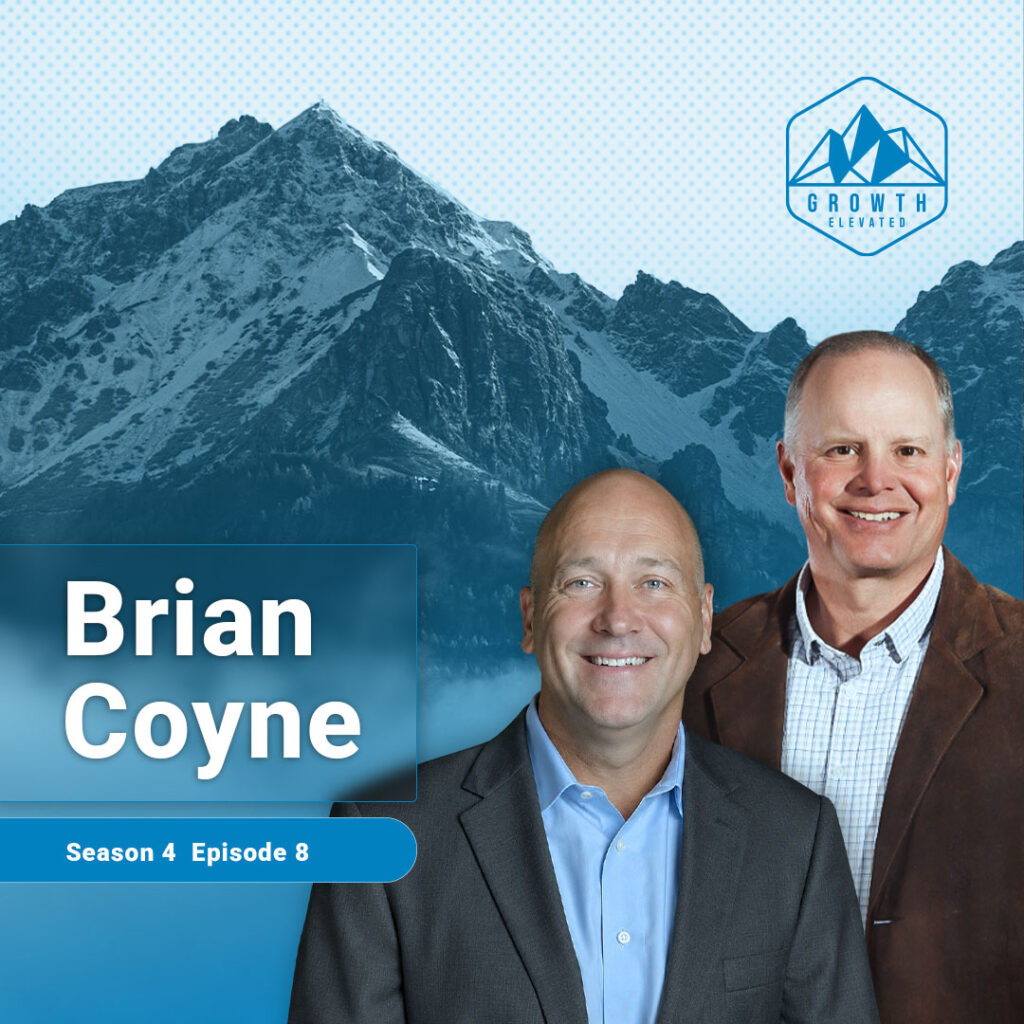
Brian Coyne on Why Robots Are Already Cleaning Luxury Hotels
What happens when the hardest jobs in hospitality become the hardest to staff?
In this episode of the Growth Elevated Leadership Podcast, host Julian Castelli sits down with Brian Coyne, CEO of The Service Companies, to unpack how automation, culture, and operational discipline are reshaping an industry most guests never see. The Service Companies provides outsourced housekeeping, overnight cleaning, and specialty services to luxury hotels, casinos, and timeshares, recruiting more than 10,000 people a year to keep properties clean, safe, and guest-ready.
Drawing on more than 25 years in the US Marine Corps, where he rose to colonel and led over 7,000 Marines, Brian explains why reliable labor is hospitality’s single biggest strategic challenge, and why he is betting that robots and drones are part of the solution. From floor-cleaning units already running on banquet and housekeeping floors to drone-assisted window cleaning and the promise of fully automated rooms decades out, he offers a grounded view of where automation helps today and where the human layer still wins.
This conversation moves beyond the headlines about robots to the systems underneath them. Brian shares how COVID forced a rebuild from the floor up, why he centralized a fragmented organization, and how the TSC Way turned culture into a driver of operational performance rather than a soft talking point.
For hospitality operators, CEOs, and anyone scaling a people-driven business, the message is clear. Technology raises the ceiling, but discipline, leadership, and culture are what deliver consistently.
Key Takeaways:
- Reliable labor is hospitality’s biggest strategic challenge, and it got harder after COVID
- Robots already handle floor cleaning today, while windows and full rooms remain years away
- Culture is what happens when no one is looking, and it directly drives the P&L
- Operational excellence is a system, not a goal or a single hero riding in to save the day
- Outsourcing is about strategic partnership and de-risking, not just cutting labor costs
👉 Visit us at GrowthElevated.com
📲 Follow us on LinkedIn for daily leadership inspiration and updates
Transcript
00:00:00:00 – 00:00:23:17
Narrator
Welcome to the Growth Elevated Leadership podcast with Julian Castelli. Each week, we talk with senior tech leaders to explore stories and insights about the challenges involved with growing technology companies. We hope that these stories can help you become a better leader and help you navigate your own growth journey.
00:00:23:17 – 00:00:51:14
Julian Castelli
Hello, this is Julian Castelli. I’m the host of the Growth Elevated Leadership podcast, where each week I talk with inspirational entrepreneurs and leaders in the tech industry and beyond. Past guests have included CEOs and CXOs of great companies like WeWork, Front Key Health Care Pathology, Watch In Moment, canopy, the San Francisco 49 ers, and many more. This episode is brought to you by Growth elevated, growth elevated.
00:00:51:14 – 00:01:15:04
Julian Castelli
It is a community of tech founders, CEOs, and CXOs who are committed to working together to share best practices and learnings in an effort to help all of us become better leaders. We do this through educational programs like this podcast and our blog, and of course, our annual ski and Tech summit in beautiful Park City, Utah. So if any of that sounds interesting, please check us out at Growth elevated.com.
00:01:15:04 – 00:01:36:08
Julian Castelli
Today I’m excited to welcome Brian Coyne, the CEO of the service companies, to the podcast. Brian is an agile, mission focused leader who drives enterprise value and growth. Brian is an expert in developing people and teams and leading complex, high tempo enterprises. Brian, welcome to the program.
00:01:36:08 – 00:01:40:03
Brian Coyne
Thank you. Gillian. It’s my pleasure to be here. Thanks for having me.
00:01:40:05 – 00:01:49:20
Julian Castelli
Yeah, I’m excited to to learn more about the service companies and your career history. Let’s let’s start with a service company. What is the service companies do for services?
00:01:49:22 – 00:02:24:05
Brian Coyne / Julian Castelli
Well, we we partner first with, luxury hotels, casinos, timeshare ownership groups. And we help them solve, you know, really, for them, thorny, labor intensive operational challenges. Julianne. We do it by providing and fully managing reliable staff in their hardest to operate departments. So we basically help them remain clean, safe, compliant, guest ready? We have. So is this the housekeepers are changed by rooms in hotels that we were talking about.
00:02:24:07 – 00:02:48:00
Brian Coyne / Julian Castelli
Yeah, that’s some of that. Some of the team who we typically will run for for major brands. And you know, we, there are some of our associates, you’ll see there’s house men as well, running around and stripping beds and moving linens from floor to floor. Many of our properties have 30 or more kitchens, on our larger 30 or more kitchens in one property.
00:02:48:05 – 00:03:18:00
Brian Coyne / Julian Castelli
Yeah. That’s right. Oh, my gosh, large casinos. Okay. And, you know, tribal properties will have, you know, massive, massive amount of square footage to, to help run clean, etc.. And we do a lot of that. So we do it all. We even do windows. And it’s not just a not just a joke. We actually do, we, we got guys who can are very skilled, hang off, sky rises and, do hard to reach areas outside and inside high touch areas.
00:03:18:00 – 00:03:43:13
Brian Coyne
But, you know, we do it, as a hospitality company. We we are full of hospitality experts on our team. You know, we have myriad, teammates who have run hotels in GM’s out of hotels and luxury casinos. So we, you know, we know how to do it within their, their atmosphere. And that’s what, that’s why they bring us aboard.
00:03:43:15 – 00:03:59:06
Julian Castelli
So, yeah, I guess I guess when you you stay at a hotel, you don’t see all the things happening behind the scenes. But like at some of these hotels with 30 kitchens, like how many, how many staff members are they employing that, that that your company might help staff
00:03:59:06 – 00:04:11:07
Julian Castelli / Brian Coyne
like a large casino, for example. Goodness, Jillian. Well, you know, we have, you know, nearly 200 employees, you know, in operation in some of our larger outfits, 201 property.
00:04:11:10 – 00:04:38:23
Brian Coyne
That’s right. Yeah. Now there’s multiple shifts throughout a 24 hour period. It really is a 24 hour operation. These major, these major properties. And, you know, we we have people doing, different work, and we run those departments, for some of the biggest brands, across those 24 hours, across multiple shifts. So, yeah, on a on the high end, you know, it can be nearly 200, on the lower end.
00:04:38:23 – 00:05:01:15
Brian Coyne / Julian Castelli
And in some cases, we’ll just help, help a property with, ten employees and get them through a, a tough patch. And what why would not these hotels just hire people themselves? When did, using a staffing supplemental staffing services company become into the vogue in the industry? Is there something a lot of people do now, or most people staff themselves?
00:05:01:16 – 00:05:03:15
Julian Castelli
How is that? Has that changed over time?
00:05:03:16 – 00:05:24:12
Brian Coyne
Well, I think it’s it will it’s been there for quite a while. I mean, we have a as an example, you know, we’re we’re the premier provider. We’ve been in business for over 40 years. And it was started with one service line, but and that was overnight kitchen cleaning. But that was outsourced. So that’s been going on much longer than that.
00:05:24:12 – 00:05:38:04
Brian Coyne / Julian Castelli
Julian. So I don’t it’s not. Is that just specialization like they just, you know, your company’s more, you know, recruits more people than than the staff at any one hotel. Are you able to do it better, faster,
00:05:38:04 – 00:05:45:04
Julian Castelli / Brian Coyne
or, you know, efficiently? Yes. I think that’s really where we get into the, the the meat of it, you know, there
00:05:45:04 – 00:05:51:06
Brian Coyne
it’s hard to find reliable labor and workforce today.
00:05:51:06 – 00:06:16:10
Brian Coyne
And, you know, it’s it’s been hard in the past. I think it’s even harder today. Covid, kind of sent a, a pulse, you know, through through the industry and, you know, it’s changed quite a bit. I think it’s probably harder now. And, so, you know, there are some just answer your first question. There are some properties, luxury resorts who who, you know, endeavor to do it all on their own.
00:06:16:12 – 00:06:49:20
Brian Coyne
And, that that is, you know, that’s where they stay focused. But in some cases they can’t because it is hard to find good, reliable labor. And the focus on covering that gap becomes, you know, so extreme it starts to take the property leadership’s eye off of other real or real core, revenue producing areas. And, and they come to a realization or we help them, come to the realization that, hey, you’re you’re losing out on opportunity here, the ability to market.
00:06:49:22 – 00:06:59:01
Brian Coyne
Let’s use housekeeping as an example. The ability to, you know, unleash your marketing engine, bring full occupancy to bear
00:06:59:01 – 00:07:15:16
Brian Coyne
is driven by, you know, being able to have that. We’re having the confidence to know that your rooms can be turned on time so that when guests check in, they’re all going to have their room and they’re not going to be waiting or, you know, moved down the street to another hotel because we couldn’t clear the house.
00:07:15:18 – 00:07:17:13
Julian Castelli
Are you saying that that hotels
00:07:17:13 – 00:07:31:16
Julian Castelli
typically don’t have all their rooms cleaned and ready to go like that, that they have a shortage of being able to actually just turn the rooms? I’m not sure I, I ever thought of that as a guest of a hotel. I just assume they’re all, you know, hallways full of clean rooms, but that’s not the case.
00:07:31:18 – 00:07:45:05
Brian Coyne
That’s in that way. More than you would ever expect. That is a key challenge. And it’s but it’s it’s often driven by, you know, the, you know, the, the bare that is finding good, reliable,
00:07:45:05 – 00:07:48:17
Brian Coyne / Julian Castelli
teammates. Has that gotten harder more recently over time?
00:07:48:17 – 00:08:11:13
Brian Coyne
I think it has. I think it has. You know, there’s a competition for, you know, the front frontline leaders that we have and the competition for the frontline employees that we have today where, you know, a skill set that we can hone, develop and really bring, you know, through a leadership continuum is also sought after by, you know, all sorts of industries, you know, Amazon, you know, you name
00:08:11:13 – 00:08:33:16
Brian Coyne
it, you land. There’s lots that, that that can pull people away from the industry. We’re back before Covid. Certainly there’s a lot more examples of where people would stay within the industry for, you know, their entire career. Just moving through the housekeeping ranks as one example, today, we’re finding that, less people are have, you know, are doing that.
00:08:33:16 – 00:09:00:05
Brian Coyne
And so, you know, organizations like ours that can still find and recruit massive amounts of people in a year, we recruit more than 10,000 people a year, which is very, very hard for any organization to do on their own when they’re also focused on training rooms. And they’re also focused on running kitchens correctly, cleanly when they’re also focused on casino gaming operations, which is their true revenue driver.
00:09:00:07 – 00:09:30:04
Brian Coyne
You know, it’s like how many, how many, how many glass balls can I keep in the air? And so it makes a lot of sense, you know, for them to consider an outsourcing an option. And, that’s where we come in. When you outsource to a company like ours, a hospitality specific company that knows what it’s doing, and is armed with, you know, experts who know how to do that and has a backbone of operational discipline, accountability, you know, and systems.
00:09:30:06 – 00:09:38:10
Brian Coyne
The merging of those two things against their hardest to operate departments allows them to not worry about them anymore.
00:09:38:10 – 00:09:59:18
Brian Coyne / Julian Castelli
It gives them the confidence that the consistency will be there and they can focus on bringing more, you know, more players into town to, to gamble more frankly. Right. Or to just basically they’re, they’re, they’re they can count on having the rooms taken care of because because the service companies can recruit the people, make sure that they’re they could train them to a certain standard.
00:09:59:20 – 00:10:04:14
Julian Castelli / Brian Coyne
And therefore, if I’m running the hotel, I can focus on filling the rooms and driving revenue. That’s right.
00:10:04:14 – 00:10:19:02
Julian Castelli
Okay. That makes sense. You mentioned Covid a few times. I know that was enormously challenging for the hospitality industry. I remember when the hotels were empty and we couldn’t go anywhere. How did that impact hospitality in general and how did it impact, the service companies?
00:10:19:02 – 00:10:44:11
Brian Coyne / Julian Castelli
Well, like much of the hospitality industry, Julianne, our business contracted dramatically. I mean, almost overnight when the pandemic hit, we have a lot of, I mean, we’re we’re we’re labor intensive as a company. And, you know, our company in a matter of weeks, laid off thousands, just out of necessity because, nobody was no one was in hotels, right?
00:10:44:11 – 00:11:10:04
Julian Castelli / Brian Coyne
Everyone’s staying home, right? No one’s traveling the hotel. So, I mean, it was, you know, truly, it was an existential moment here, and it forced for some real change. And the recovery that followed wasn’t simple. You know, I came in on the, you know, in the midst of that recovery, and I would say we’re we’re just now coming out of that phase, which is a good news story, but it wasn’t simple climb volumes in an industry.
00:11:10:04 – 00:11:44:05
Brian Coyne
Julianne, that we were reacting to, they were coming back slower than expected, you know, from, from, you know, experts their, their entire life, in, in hotels or casinos, all were projecting a quicker return, and it just wasn’t happening. The competitive landscape, you know, across the industry shifted about labor costs rose, you know, the old relationship based way of winning business, you know, for a company like ours no longer work the way it wants out either.
00:11:44:07 – 00:12:09:18
Brian Coyne
So now, on the good news front, you know, I can certainly speak from from, my time, implementing certain things, you know, rather than waiting for the market to fully return to normal and to presume it was going to return to normal, we use that period to rebuild the company’s foundation from the four, culture first operations, the entire go to market approach, eventually.
00:12:09:18 – 00:12:17:20
Brian Coyne
And now, like, we’re super energized about automation, at every turn. And so we’re coming out stronger and more resilient than before.
00:12:17:20 – 00:12:30:21
Julian Castelli
So, so, you know, let’s let’s talk about like, your career history a little bit, because I recall you telling me that, you know, you came in right after this Covid disruption, right? And had to help kind of rebuild the business.
00:12:30:21 – 00:12:49:15
Julian Castelli
Right. And you know, something about, recruiting and, and, and managing large groups of people. Right. You had a very successful career in the U.S. Marine Corps, right? Tell us a little bit about your background and how that prepared you for coming into this, you know, challenging crisis moment at the service companies?
00:12:49:15 – 00:12:54:23
Brian Coyne
Yeah. Julian, my my background prepared me really well, for, for this job.
00:12:54:23 – 00:12:58:02
Brian Coyne
It was a it was an absolutely excellent fit,
00:12:58:02 – 00:13:24:11
Brian Coyne
one of the, one of the core challenges coming out of Covid, you know, for a company like ours, was to deliver to property when properties were opening up the required amount of people to get the job done, you know, to the to the contract and and so, you know, recruiting and the ability to recruit and stabilize that again, was very hard.
00:13:24:11 – 00:14:01:02
Brian Coyne
My background and you know, and recruiting, certainly help them, you know, along those lines. But I’d say even more important than that really just was a just being brought up, with, you know, in so many different, organizations within the Marines all centered the same way, though, you know, built about, built around you know, a, a solid foundation and planning, accountability, discipline, good leadership, integrity, all of that had to come to bear to fix.
00:14:01:02 – 00:14:10:19
Brian Coyne / Julian Castelli
First, I would say the recruiting problem, that not just the service companies was contending with, but everybody. And yeah, you had this is industry shock, right?
00:14:10:19 – 00:14:24:17
Julian Castelli
And everyone scattered. When did different things. They became Uber drivers. They figured out other things. Right now you have to bring everyone back and and the industry’s been changing. So like the give us some examples that tell us a little bit about what you did in the military.
00:14:24:17 – 00:14:47:13
Julian Castelli / Brian Coyne
So so we have the context. And then they’ll ask you questions about how how it related okay. Well at my core, I’m an infantry officer. Most of my time in the Marines was was in the infantry. And if you’re at all familiar with the military, you know, you’re, you want to be in, in the operational units that deploy and and, do the nation’s bidding worldwide.
00:14:47:14 – 00:15:17:08
Brian Coyne
I was fortunate, to be, you know, in those in those units from my my time as a young lieutenant of Marines, and I was able to, you know, command units all the way through the rank of colonel, which, culminated in, commanding the largest marine infantry regiment, certainly at the time. And, and and and nonstandard large to because of, you know, some changes that were also taking place in the Marine Corps at the time.
00:15:17:10 – 00:15:42:17
Brian Coyne
So I had seven infantry battalions, about a thousand strong, each that came through me to, work through their training continuum, their development continuum, their, execution continuum to be certified and ready to deploy, to do the nation’s bidding. And that’s where the rubber meets the road. It’s it’s it’s blueprinting. And building those units from scratch
00:15:42:17 – 00:15:48:14
Brian Coyne
in order to get them ready and reset them for deployment worldwide.
00:15:48:16 – 00:16:01:09
Julian Castelli
So that’s an incredible standard. You have to you have to take the raw material, these people from all over the country and make them ready to go to the front lines as the US Marine Corps that, that actually, I can’t think of a better,
00:16:01:09 – 00:16:06:21
Julian Castelli
comparable in terms of what you’re doing now in terms of, you know, finding talent and getting them up to a certain standard.
00:16:06:21 – 00:16:23:15
Julian Castelli / Brian Coyne
And, you know, in the hotels. But, you know, the that working with the Marines was, serious business. It was I loved it, I absolutely loved it. My family loved it. In fact, the only reason I got out was because of a, you know, health scare with my son. And then it was just time for us.
00:16:23:15 – 00:16:27:12
Brian Coyne
But, I tell you, I loved every bit of it, but the
00:16:27:12 – 00:16:28:03
Brian Coyne
the
00:16:28:03 – 00:16:48:02
Brian Coyne
skills, the mindset, you know, the the, the DNA that all Marines who spent, you know, like me, spend more than a quarter century, doing it bring, certainly to a company like this, which is, you know, it’s geographically
00:16:48:02 – 00:16:53:08
Brian Coyne
disparate. I mean, we run from the east coast of America to the West Coast.
00:16:53:08 – 00:17:34:14
Brian Coyne
We’re out in the Pacific, in Hawaii. We’re out in the Caribbean as well. We have, you know, well over 300 clients, Julian. And, you know, being able to operate this, decentralized organization and constantly make sure you have a state of readiness. You have, you know, a training, program to speak of so that you can, continue to promote from within because it’s way more efficient and, you know, you engender loyalty, the ability to standardize operations, standardize and inspection programs and to just have a system to run an outfit like this.
00:17:34:14 – 00:18:03:07
Brian Coyne / Julian Castelli
I mean, all of that. For me, it was, frankly, second hand because of my experience. Yeah. You have a history and a and a process of bringing human labor to a certain standard, you know, at a huge stage in a, in such an important stage in the military. So now, you know, applying that to the hospitality industry, you know, do you think, do you find that that that’s an advantage for you, like when you when you look at the rest of the industry, do they, you know, have those kind of standards?
00:18:03:07 – 00:18:10:03
Julian Castelli / Brian Coyne
And how’s that played out, your tenure at the service companies? I’m finding it more and more, you know, each,
00:18:10:03 – 00:18:30:10
Brian Coyne
every, you know, the, the, my client interactions, ownership group, GM level director of hotel for large hotels. It’s becoming more more and more of a refrain. You know, they’re they’re enjoying that engagement. They really appreciate the style which is a little bit more direct.
00:18:30:12 – 00:18:36:20
Brian Coyne
It’s reliable. It comes with accountability and discipline. But more importantly, they’re seeing in action
00:18:36:20 – 00:18:56:02
Brian Coyne / Julian Castelli
what we talked about. And so we’re backing it up. Yeah. You’re delivering it. Right. Words. Words alone. No don’t matter if you don’t deliver. That’s right. Jillian, if you can’t if you can’t answer the mail when you’re deployed as a marine and you’re you’re sent into harm’s way and you don’t uphold that reputation that Marines have landed, okay?
00:18:56:04 – 00:19:21:08
Brian Coyne
You’re putting your country at risk. Now throttle down. You know, the the the theatrical statement there for. But it’s a very true statement. Throttle that down for a second. Here in the hospitality space, they care just as much. In fact, some of these leaders that I interact with are just, you know, they’re absolute meat eaters. And they will, you know, they will carve you up if you’re not ready and you’re not delivering.
00:19:21:10 – 00:19:55:14
Brian Coyne
So what I’m finding in an increasing way is that they really are happy to be engaging with the service companies and, and the, you know, that has a backbone from the military, but is also buttressed by, you know, exception hospitality leaders who have spent, you know, upwards of 30 years themselves, right, in the hospitality space. So the merging of those two disciplines and, you know, and that experience is really making a difference, not just another company, but how we’re perceived across the industry.
00:19:55:16 – 00:20:02:22
Brian Coyne
And it’s now getting us a nice referral base and allowing us to get more and more opportunities. And our pipeline is reflective of the
00:20:02:22 – 00:20:07:03
Julian Castelli
but that does sound really strong, you know, industry experience plus your military,
00:20:07:03 – 00:20:19:10
Julian Castelli
blueprint and and experience there. That’s a strong combination. So you you were recruited for this job. Someone did a good job of finding you, but then Covid kind of blew things up.
00:20:19:10 – 00:20:42:19
Julian Castelli
And you’re coming in in 2023. You got a battlefield promotion I guess. I mean, within the service service companies. Right. And and, you know, you know, that that usually happens when things are hard. And I suspect things were pretty hard after, Covid. So, you know, what did you see that convinced you that the company had some exciting potential at that time?
00:20:42:19 – 00:20:46:23
Julian Castelli
I’m sure there were more challenges than, opportunities. You had to look through those challenges a bit.
00:20:46:23 – 00:21:01:05
Brian Coyne
Well, yeah. I’m drooling. When I came in, I saw a company that had a good reputation in the industry. Certainly had talented people, great great, great teammates and great leader. Sir, and decades of experience, you know, serving Permira hospitality brands.
00:21:01:05 – 00:21:20:17
Brian Coyne
I mean, the biggest ones you can think of. Right. And that foundation doesn’t happen overnight. So it definitely told me there was something here to build on, and I was energized by that. But I definitely saw opportunity, there was no doubt about it. And you’re right, I benefited from kind of coming in, and needing to help stabilize and provide a little bit of stiffening here.
00:21:20:19 – 00:21:48:17
Brian Coyne
So I saw a chance to elevate the organization by standardizing leadership expectation, operational processes, accountability. And I, you know, to do so across every market we served and that, you know, that focus and frankly, clarity, allowed me very quickly to make some changes. We were very, fragmented and decentralized. Just just to give you one example, at the outset, we ran nearly everything, by regions,
00:21:48:17 – 00:21:55:09
Brian Coyne
you know, across that phone and I spoke about earlier, and, very little was, was centralized.
00:21:55:09 – 00:22:21:13
Brian Coyne / Julian Castelli
And, so, you know, the the delivery was, at best, you know, inconsistent. And, so it allowed me to just, you know, very quickly, with some finger fuel from what I’d done in my past, make some changes where centralization made more sense to, to gain some economies of scale. So you can create a standard, you can bring that standard from, you know, from your background across the whole organization, not one at a time.
00:22:21:15 – 00:22:25:08
Brian Coyne / Julian Castelli
That’s right, that’s right. Regional department by department. That’s right,
00:22:25:08 – 00:22:39:06
Brian Coyne / Julian Castelli
that’s right. So talk to me about the TSC way. Was that something that, you know, you brought over from from the Marines like, that’s a that sounds like a very, slogan, any type of thing that you’ve probably had some, different, different things in the Marines that that you were inspired by.
00:22:39:08 – 00:22:50:07
Brian Coyne
Well, I mean, not directly. I mean, your last statement is true. I mean, I was definitely inspired by a lot, and we had a couple of slogans, but this one in particular was more homegrown, and it was based on
00:22:50:07 – 00:23:02:21
Brian Coyne
I mean, I drove it, but I drove it because of what I was seeing. I was fortunate to come in and observe for two months, really, in a, in a position before I took over as the CEO of this company.
00:23:02:21 – 00:23:27:07
Brian Coyne
And in that observation, I made, you know, I laid out very clearly, some of the things that I had seen and a lot of it had, really boiled down to, you know, we didn’t have a clear, strategy. We didn’t really know who we were, as a company, as a collective company. And, the culture, really wasn’t
00:23:27:07 – 00:23:28:10
Brian Coyne
clearly defined.
00:23:28:10 – 00:23:29:11
Brian Coyne
And, and so,
00:23:29:11 – 00:23:57:13
Brian Coyne
I was able to bring in nearly 80 leaders across two different major venues, and collaborate on this. And, ultimately, we settled on the culture portion first and the image their way through to 2025. This is back in 23. And, you know, let’s put down on paper what kind of company we want to be proud of in two years and and what will help us get there in terms of values and guiding principles.
00:23:57:13 – 00:24:36:00
Brian Coyne
So we spent time on that. First, Julian. And and we called that collectively the TSC way. I was, you know, driving that mindset. But it was organic from those sessions. And that was step one. Step two was really, evident from the, recruiting and HR centralization work that we had to put in motion to be able to be more effectively relying on the huge people engine that we need to count on was employing that and blueprinting across a massive amount of battlespace.
00:24:36:00 – 00:24:57:17
Brian Coyne / Julian Castelli
Now our operation so that we were consistent and we weren’t leaking. And so the TSD way is much more broad than the culture, the bigger piece of that is the operation now. And sure, each department within it. So. Well, let’s but let’s double click on culture. I think that’s, that’s really important. So culture is often viewed as a soft topic.
00:24:57:17 – 00:25:04:21
Julian Castelli
But but this is a people standards industry. So so so why do you believe culture is one of the strongest drivers of operational performance?
00:25:04:23 – 00:25:27:00
Brian Coyne
Well, I think it determines how people operate and make decisions when no one’s looking. And in our business, leaders can’t be everywhere at once. I just, you know, the way it goes and that’s, you know, most businesses are probably like that. I think that’s why culture matters so much. So, you know, they have to know what you value.
00:25:27:02 – 00:25:53:14
Brian Coyne
They have to know that, you know, the principles that guide the company. You know, are are focused on them, what they’re doing and who you know, who they’re serving. And if they know they’re believed in and cared for and they’re clear on what we’re doing and why and and who we’re serving and how we want that to come across, no matter what we can’t be in front of as leaders.
00:25:53:18 – 00:26:17:07
Brian Coyne
It will probably get done. You have your increase, your chances of getting done better and the right way. You know, and then just simply right. I think strong cultures reduce turnover. And and because we have so many, so many people in, you know, that we’re constantly, you know, partnering with or, you know, or teaming with, you know, it matters a lot.
00:26:17:09 – 00:26:41:21
Brian Coyne
Culture improves our engagement and in hospitality, Julian, I mean, it’s how you come across to the customer of our client and how you come across to our client matters greatly. You know, at the end of the day, I mean, it’s a direct linkage to our pal, and, you know, and so consistent execution, makes it makes a huge bit of difference, you know, in terms of how we perform financially.
00:26:41:21 – 00:26:46:05
Brian Coyne
Last, you know, I would say that, you know,
00:26:46:05 – 00:26:49:11
Brian Coyne
culture is the engine. And I think it drives.
00:26:49:12 – 00:26:50:12
Brian Coyne
It drives
00:26:50:12 – 00:27:21:00
Brian Coyne
the company’s, future success. You can put out a five year plan. You can have a fantastic strategy. You can lay out a, fantastic operational blueprint for your team. But if they don’t feel like they’re part of a team in the first place, and they don’t feel like they’re cared for by their leaders, and they don’t feel like what they’re doing is right or doesn’t make them feel good, they’re probably not going to perform for you the way we need them to perform.
00:27:21:02 – 00:27:43:05
Brian Coyne / Julian Castelli
Right. And that helps us, you know, keep our clients and gain more clients. And and that’s why culture is so important. It makes a lot of sense. So it looks like it sounds like that’s one of the pillars that you use to drive operational excellence. How can you you know, that’s such a vague term, right? Like, how can you how can you drive operational excellence as a system rather than just a goal?
00:27:43:05 – 00:27:45:04
Julian Castelli
How do you how do you operationalize that?
00:27:45:04 – 00:28:10:20
Brian Coyne
Well, I think you break it down first and you make it clear what you, how you define it, what it what what the component parts are. You know, I think operational excellence, is a result of discipline, processes, leadership, training and measurement all working together. And I don’t think it’s a destination you just arrive at.
00:28:10:20 – 00:28:32:07
Brian Coyne / Julian Castelli
I think it’s a system in and of itself, right? That you maintain and and then I think consistency is built through systems, not individual heroics. You know, I’ve talked often about of, of the white knight riding in to save the day. Right. Like that. That’s not a blue across thousands of employees. That’s a, that’s a, that’s a tough thing just to counter.
00:28:32:09 – 00:28:59:12
Brian Coyne
That’s right. That’s right. And that’s why, you know, some of the earlier centralization discussions, really, you know, you know, we had so many conversations about centralizing, some of our operation to get a handle on that. And so, you know, I think strong organizations and certainly what I’ve experienced improve consistently. Julianne. Right. Instead of reacting to problems after they occur.
00:28:59:14 – 00:29:14:15
Brian Coyne
And, you know, I think that’s the difference between managing a business and engineering one. So, you know, the system is super important. And I think each system. Right. And high performing team that that kind of value systems,
00:29:14:15 – 00:29:24:19
Brian Coyne
you know, shares three characteristics regardless of industry but military, you know, hospitality. I see your friends now in multiple industries.
00:29:24:19 – 00:29:38:20
Brian Coyne
I’d say leader quality and and leader endurance is super important. And that’s something that I’ve been evaluating very closely here. And we spent a lot of time on. And the service companies discipline and execution and consistent coaching
00:29:38:20 – 00:29:39:17
Brian Coyne
at every level.
00:29:39:17 – 00:29:51:11
Brian Coyne
I’m coached by my board, my ownership group. I have been and, you know, I value it down to our frontline employee, the newest guest room attendant.
00:29:51:13 – 00:30:10:01
Brian Coyne / Julian Castelli
Super important that they’re coached regularly. And I don’t think any teams are immune to that, but those that’s something like that’s something that you’ve changed as part of the culture. Now, is that something to do it you guys are demonstrably doing more of now than, than was done in the past? Yes, for sure. And you’re seeing the impact.
00:30:10:03 – 00:30:33:03
Brian Coyne / Julian Castelli
Absolutely, absolutely. We’re seeing with our retention. You know, we have fantastic retention and long tenure. Yeah, that’s that’s huge in the people business, right? That’s right. So, you know, you guys have gone through a number of changes recently. You were telling me earlier about some of the investments you’ve been male the make you know, to to grow the quality of your organization, to kind of be the foundation for your future growth.
00:30:33:03 – 00:30:34:11
Julian Castelli
Tell me some about some of those things.
00:30:34:11 – 00:30:43:12
Brian Coyne
Well, you know, Julian, we’ve we’ve started to invest strategically, which is which is really nice. You know,
00:30:43:12 – 00:31:13:06
Brian Coyne
again, coming out of Covid, it was it was hard to appreciate, you know, where the industry was going, how the company was interacting with the industry. And, you know, it’s become clear now that, you know, there were there were certain things that if we if we wanted to continue to grow and make sure we could truly scale, the company we needed to, to put into place so we, you know, we started investing strategically, instead of, like, more near-term, which is I think
00:31:13:06 – 00:31:20:11
Brian Coyne
it’s a fair statement to say how we were looking as a company when I joined the team. And that changes everything. That shift in horizon
00:31:20:11 – 00:31:40:08
Brian Coyne
and how you look at it a little bit more long term strategic versus near-term sort of triage changes everything and how you build a company. So we’ve made just specifically we’ve made investments in leadership development technology, significant strides in technology across nearly all departments.
00:31:40:08 – 00:32:04:17
Brian Coyne
Now. Some are still like in motion, but because of the success we’ve had, you know, internally, you know, in terms of automating our, our, our air and recruiting function, in terms of bringing on a very modern tech suite to help our go to market motion, you know, automation at our properties. We, you know, we’re piling robots today on our properties, but but just real time.
00:32:04:21 – 00:32:34:16
Julian Castelli / Brian Coyne
I want to hear more about the robots, but we’ll get back to that. Okay. Excellent. Real time, you know, reporting within our operation against our measurements for success, is something that’s, much easier said than done in a geographically disparate multi property, multi flag enterprise that that is using different systems already that we kind of in some cases come into.
00:32:34:17 – 00:32:55:03
Brian Coyne
And so we’re now getting a you know, because of automation and our success and comfort with it based on these investments we’re starting to figure that piece out. And it’s really got me got me energized. You know, and, and, you know, it’s just a virtuous cycle. I mean, we invest in people, their atmosphere, their resources,
00:32:55:03 – 00:32:57:20
Brian Coyne
which is a little bit different than when I joined the company.
00:32:57:22 – 00:33:04:18
Brian Coyne
We’re seeing that they deliver, you know, we deliver better outcomes. Our teammates deliver more, and clients then stay longer because they’re happier.
00:33:04:18 – 00:33:21:03
Julian Castelli
That’s great. So Brian, you mentioned a five year plan. Let’s talk about your 26 through 30 outlook. Like what is what is the the what are the tenants of your strategic plan and how are you going to, grow this business to, to to the, place where you and your shareholders are all looking forward to?
00:33:21:03 – 00:33:47:18
Brian Coyne
Yeah. Thanks, Julian. A few key pillars, for for that plan. We want to deepen customer success, to drive retention of our clients and expand with those clients. Many of our clients have multi, you know, multiple properties. And, you know, you know, we want to be the, the go to, solution that’s rely upon you know, in the high end luxury space.
00:33:47:20 – 00:34:08:06
Brian Coyne
And we want to continue to be that so customer success and formalizing that, more than where it had been and even more than where it is today, for sure. We’re very interested in this, a key pillar, another key pillar is automating and innovating. I mean, we just talked about that, but, you know, that’s not done.
00:34:08:06 – 00:34:12:06
Brian Coyne
It’s never going to be done at this point. I mean, you know, you of all people know the
00:34:12:06 – 00:34:28:13
Brian Coyne
the pace of change and the, you know, the, the assistive tech today is just incredible. And I want to take part in as much of that as possible. We’re already seeing the benefit of it as a team. We’re going to continue to modernize our go to market engine.
00:34:28:13 – 00:35:11:10
Brian Coyne
We’ve had an incredible year after having invested in that, and, and we’re just now starting to scratch the surface with just incredible results. Based on now, I want to keep feeding that and putting, gasoline on that, as a pillar. And lastly, Julian, from a pillar standpoint, just sharpening our focus on our service lines, even more than than we have today, especially where we can deliver the most value, you know, the benefit of focus and, you know, really honing in on what we’re good at, what we’re expert at, and what, you know, in turn, creates enterprise value, is where we should be focused and we should, you know,
00:35:11:12 – 00:35:13:20
Brian Coyne
focus less on areas that aren’t that.
00:35:13:20 – 00:35:22:21
Julian Castelli
All right. Now, now I want to hear about the robot story. Are we going to be having robot housekeepers in the future or to be walking? You know, the room service trays delivered by,
00:35:22:21 – 00:35:26:22
Julian Castelli
you know, what do you call the humanoid robots? What are you looking at here?
00:35:26:22 – 00:35:30:02
Brian Coyne
Julian, eventually I listen.
00:35:30:06 – 00:35:56:14
Brian Coyne / Julian Castelli
My prediction is, and it’s not around the bend. What have you guys tested out so far? Yeah. So, I mean, we’ve got a pilot program underway, with like minded clients who are very interested in that. And, frankly, they don’t want they want robots, on their property because they exist. And we, you know, we’re good, you know, value added, service provider, you know, in that, in that, equation, and we want to do more of that.
00:35:56:14 – 00:36:31:00
Brian Coyne / Julian Castelli
But today, I mean, it’s, it’s predominantly, in terms of reliability. It’s predominantly, you know, floor cleaning units. So whether it’s, you know, sweepers, these giant roombas, more or less. Julian. Yes. You know, fully automated, they go and, you know, behave, dump themselves and, and, you know, get back out and operate on, on our, you know, banquet floors, in our larger areas, even up on our, our housekeeping floors, we have robots that are doing all sorts of floor work.
00:36:31:02 – 00:36:47:09
Brian Coyne / Julian Castelli
And that’s really where I think the, the robotics, has fully matured. There’s some things around the bend, that we’re, we’re in conversation, you know. Yeah. What do you think we’ll see next windows or. That’s such a dangerous job, I wonder. Yeah. You know,
00:36:47:09 – 00:36:56:14
Julian Castelli
I’ve, I’ve started to see some things on my, my, my social media feed where there’s, like, something that I throw in a window and it zooms around and cleans things is, is that in the future?
00:36:56:14 – 00:37:08:23
Julian Castelli / Brian Coyne
Have you seen some of those demos? Certainly. Yeah. It’s already here. And and so we, you know, we use drones as an example. Use drones today. We use windows where it makes sense. We do. Absolutely. We want to get the hard to reach areas.
00:37:08:23 – 00:37:20:08
Brian Coyne
Yes. In the, in the right area to use them. You know, but the, the drone technology is not advanced enough yet to do as good of a job, as, as people do.
00:37:20:10 – 00:37:21:02
Brian Coyne
And,
00:37:21:02 – 00:37:57:08
Brian Coyne
I can speak from, you know, firsthand experience here. But that’s that that is indeed the case. And so it’s not it’s not a full replacement yet. And I think, Julian, this gets back to, I mean, so windows, by the way, there are other systems now, especially with new builds where they’re already integrating automated, robot window cleaning technology on skyscrapers with the new built but the retroactive fit for these systems on older buildings, you know, the required kind of, engineering, construction, topside to be able to handle that.
00:37:57:08 – 00:38:29:13
Brian Coyne / Julian Castelli
And, and the, you know, the agility of the robot to be able to, you know, retrofit there that that’s something that’s kind of. Yeah, it’s much more complex to retrofit than have a builders build to suit it is. But that’s, that’s already, you know, that’s already in motion. And, you know, you can see just drones alone. But, you know, there’s all sorts of technology and I think improvements come in where, you can you can deploy, robot, to, to scale a building and effectively and, cleanly, you know, operate it’s not there yet.
00:38:29:15 – 00:38:50:02
Brian Coyne / Julian Castelli
I think there’s large, there’s robots that that eventually to the future that will come in and be able to just, you know, take over a room and, and, do all aspects of it. They don’t think that they’re not reliable. Yeah. That seems like that would be a welcome, use of technology given the shortage in the area that you’ve been describing.
00:38:50:02 – 00:39:00:08
Julian Castelli
So let’s shift to the future of hospitality. Okay. So looking ahead, what trends do you believe will have the greatest impact on hospitality operations over, let’s say, the next decade?
00:39:00:08 – 00:39:05:07
Brian Coyne
Well, I think workforce availability, will remain one of Hospitality’s biggest
00:39:05:07 – 00:39:16:23
Brian Coyne
strategic challenges to me. You know, and and I’d say that in light of all of the discussion on robots, I think it makes workforce stability and retention real competitive advantages.
00:39:16:23 – 00:39:44:07
Brian Coyne
For anybody who’s in the business of, employing people reliably and counting on to show up and not just an HR talking point. I think tech automation AI will continue to improve and then continue to improve efficiency. But operational excellence, Julian, which is, you know, you know, the high end sort of output of all of the people and, resources piece to do the job.
00:39:44:07 – 00:40:07:16
Brian Coyne
Right, with somebody who’s trained to do it. I think that’s going to continue to depend on disciplined execution and strong leadership in terms of human beings. I don’t think that that human layer goes away. And I think guests, you know, the guest experience, because we’re in hospitality and, you know, we’re all about making, you know, making our clients a vision for their customers.
00:40:07:16 – 00:40:37:13
Brian Coyne
I, happen, and make it seamless. I think, you know, guests are going to continue to expect exceptional experiences delivered consistently and that the importance of, you know, keeps the importance super high, of reliable operational partners and scalable service models. And I would also add, you know, the unity of command, you know, I, I often say one throw the choke like, you know, let us do this for you.
00:40:37:13 – 00:40:42:12
Brian Coyne / Julian Castelli
We’ll do this department will do this, department will do this. You’ve got a thick neck. That’s right. All right.
00:40:42:12 – 00:40:54:01
Brian Coyne
You know, we’ll do it. We’ll do it for you. Will aggregate that cost will do it, you know, cheaper. But you can you can rely on this and ultimately your repertoire and your, you know, your, your, your, your occupancy.
00:40:54:02 – 00:40:57:20
Julian Castelli
Do do your customers believe that or do you have to kind of prove it to them?
00:40:57:22 – 00:41:21:16
Brian Coyne / Julian Castelli
Hit or miss? Jillian. Those that have had, experiences before, the successful experience with outsourcing, 100% believe it. You know, if they’ve had experience with us, they they believe it. But in some cases. But there’s like a misperception, right? It’s like like, so if you could change one assumption that hospitality executives have about outsourcing, what would it be?
00:41:21:17 – 00:41:46:15
Brian Coyne / Julian Castelli
Well, it’s not it’s not just about reducing labor costs, you know, and it shouldn’t be looked at it that way because you’re going to you’re going to ultimately end up being disappointed and you’re going to be shopping again, and you’re going to be doing that because, well, is that because you get what you pay for? People looking, looking for cheap labor or even even gray labor, and then then regretting the quality and the risk it creates, I think.
00:41:46:15 – 00:42:06:05
Brian Coyne
Yeah, Julianne, I do I think often it’s a, it’s a, you know, it’s, you know, just dealing with the near term as opposed to that strategic view that I was talking about. But it should be, you know, less about I mean, cost always comes into the equation, but you can’t expect to bring someone in, you know, to do it,
00:42:06:05 – 00:42:08:00
Brian Coyne
you know, cheaper than you.
00:42:08:00 – 00:42:09:17
Brian Coyne
And,
00:42:09:17 – 00:42:41:00
Brian Coyne
Do it cheaper than you. And then, ask them to do more than you were able to do. You know, unless you find the right partner who’s got the chops to be able to do it, and I think so, you really have to find the right operational partner that can truly, as a hospitality company, understand your operation first to give you the right kind of, you know, estimate on what it’s going to take based on your scope,
00:42:41:00 – 00:42:52:04
Brian Coyne
add to your scope, essentially what you’re missing before it’s, you know, a problem later and have a legitimate discussion about what it’s going to take to do the job you’re saying you want
00:42:52:04 – 00:43:23:04
Brian Coyne
to elevate to for, for star status. Right. And, and, and so you need a partner who knows and understands how to do that and help you find, you know, that strategic solution that’ll help you improve the performance that you’re probably chasing that’ll help your problem, you know, improve the consistency you’re looking at Chase you’re chasing today, accountability and de-risk you, to a large extent, you know, because a full service provider like the service company does it all.
00:43:23:06 – 00:43:44:20
Brian Coyne
They take on all of the leadership management H.R. You know, payroll, benefits, etc., and we cover all of that and we’re fully compliant. So you put that into a company that understands the business, takes it off your plate. All right. It’s that’s a it’s a much bigger comprehensive view than just reducing labor costs.
00:43:44:20 – 00:43:51:09
Julian Castelli
Yeah. That really frees you up to focus on revenue or occupancy or or, you know, the gaming side of the business.
00:43:51:09 – 00:44:06:18
Julian Castelli
So, you know, huge, huge benefit knowing that your, your, housekeeping and services side is taken care of that that makes a lot of sense. So let’s let’s conclude what’s, what’s the what’s the next chapter for to see to look like. Well what do you want to do over the next couple of years.
00:44:06:18 – 00:44:09:06
Brian Coyne
Well Julian, we’re we’re in a growth phase right now.
00:44:09:07 – 00:44:38:07
Brian Coyne
And, I, you know, I want to I want to blow it up. You know, the foundation is now built for sustainable, scalable expansion. You know, we’re not reacting, to to fixes as much as, you know, we were as an example when I joined the company and, you know, we’re focused on disciplined growth as a company, strengthening client, relationships and, retention, expanding relationships across all of our service lines.
00:44:38:08 – 00:45:01:08
Brian Coyne
Continuing to invest in the systems and leadership pipeline that make consistent execution possible. And lastly, I would just say, you know, coming out of Covid, given that context, it’s not just a comeback story after Covid here. I mean, this is a blueprint. And I feel really good about we’ve proven to this, this point that the model works, and now it’s a matter of accelerating what we’ve already built.
00:45:01:08 – 00:45:21:10
Julian Castelli
Well, that’s that’s awesome. Congratulations on this, transition to to leading leading men and women across, you know, from our services and front lines to across the front lines of the hospitality industry. It’s exciting to hear what you’re doing there. If people want to learn more about what you’re doing or get to know you or the service companies, where can they find you?
00:45:21:10 – 00:45:36:00
Brian Coyne / Julian Castelli
Well, I’m on LinkedIn. You can find me there. You can find us on our website. Just just do a search of the service companies. And companies, plural. That’s right. And, you know, that’s that’s an easy way to get Ahold of me as well.
00:45:36:00 – 00:45:39:21
Julian Castelli
Fantastic. Well, Brian, thank you for telling us your leadership story today.
00:45:39:22 – 00:45:46:21
Julian Castelli / Brian Coyne
Congratulations on all the success. And, we’ll look forward to sharing this with our community. Thank you. Julianne.
00:45:46:21 – 00:45:52:02
Brian Coyne
Truly a pleasure. And thanks for your time. And, allowing me to come on your, your podcast. Really appreciate it.
00:45:52:02 – 00:45:54:16
Julian Castelli / Brian Coyne
Likewise. Great having you on. Okay. Thanks.
00:45:54:16 – 00:46:15:07
Narrator
Thank you for listening to the Growth Elevated Leadership podcast. If you enjoyed this episode, would you please follow us and subscribe on your favorite podcast player and we’d be grateful if you recommend it to a friend. If you’d like more resources on how to become a better leader in business, we invite you to visit us at Growth elevated.com.
00:46:15:09 – 00:46:25:01
Narrator
We’ll be back next week with more insight from another great tech leader. Thank you.
Timestamp
What The Service Companies Does (01:49)
Brian explains how TSC helps luxury hotels, casinos, and resorts solve labor-intensive operational challenges.
Why Hotels Outsource Operations (05:03)
The labor shortage, operational complexity, and why outsourcing has become a strategic advantage.
Rebuilding After COVID (10:19)
How the hospitality industry changed and how TSC rebuilt for long-term growth.
Marine Corps to CEO (12:30)
Brian shares how leading thousands of Marines shaped his leadership philosophy.
The TSC Way (22:25)
Building a unified culture and operating system to standardize leadership and execution.
Culture as a Competitive Advantage (24:57)
Why culture drives accountability, retention, customer experience, and business performance.
Operational Excellence by Design (27:43)
Creating systems, coaching, and disciplined execution instead of relying on individual heroics.
Investing for Scalable Growth (30:34)
Leadership development, technology, automation, and building long-term capabilities.
The Future of Hospitality & Robotics (35:13)
How AI, automation, drones, and robotics are transforming hotel operations.
Changing the Outsourcing Mindset (40:54)
Why hospitality leaders should view outsourcing as a strategic partnership, not just a cost-saving tactic.
The Next Chapter for TSC (44:06)
Brian outlines his vision for sustainable growth, stronger client partnerships, and continued innovation.